Flexa Robotic Hand
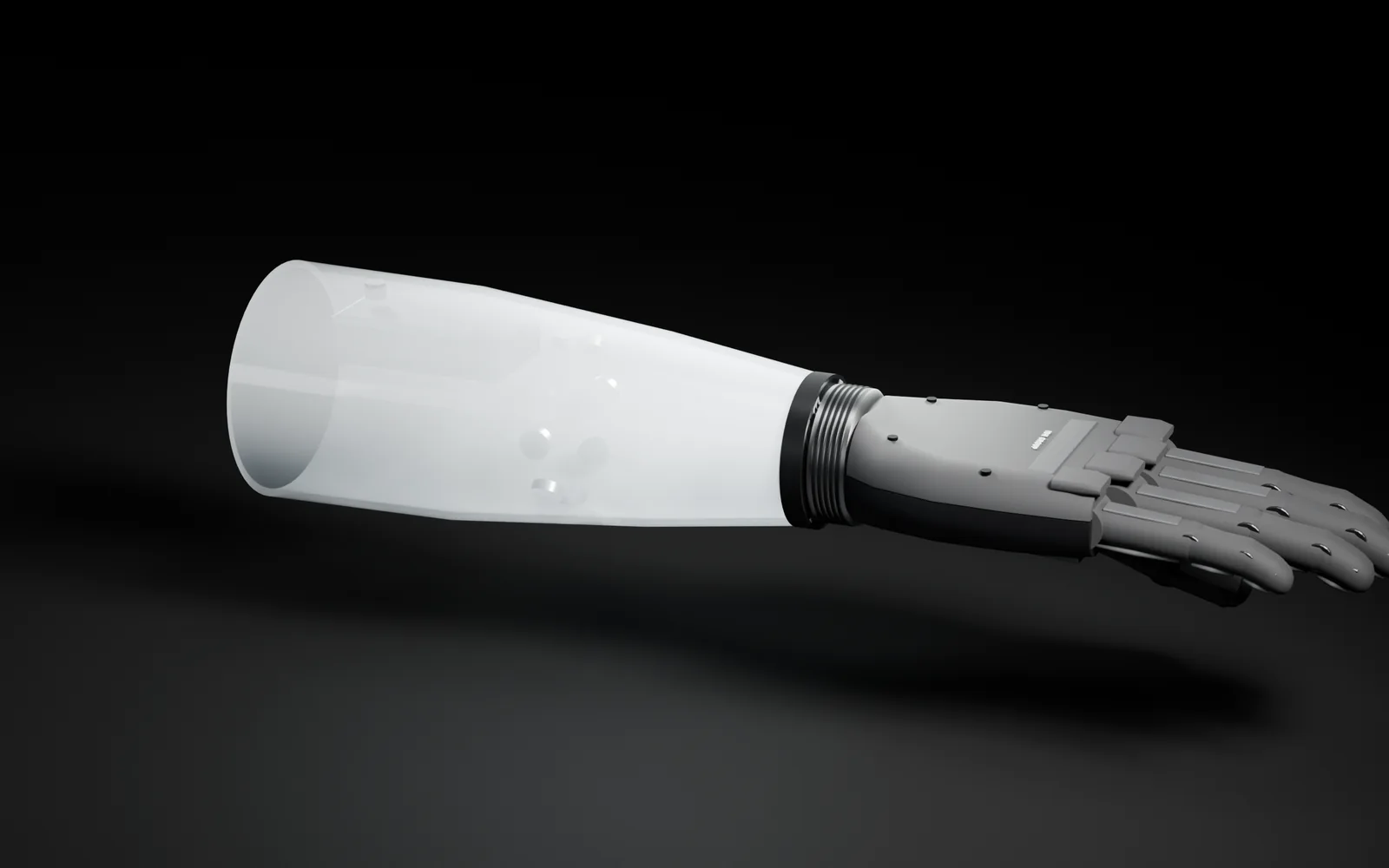
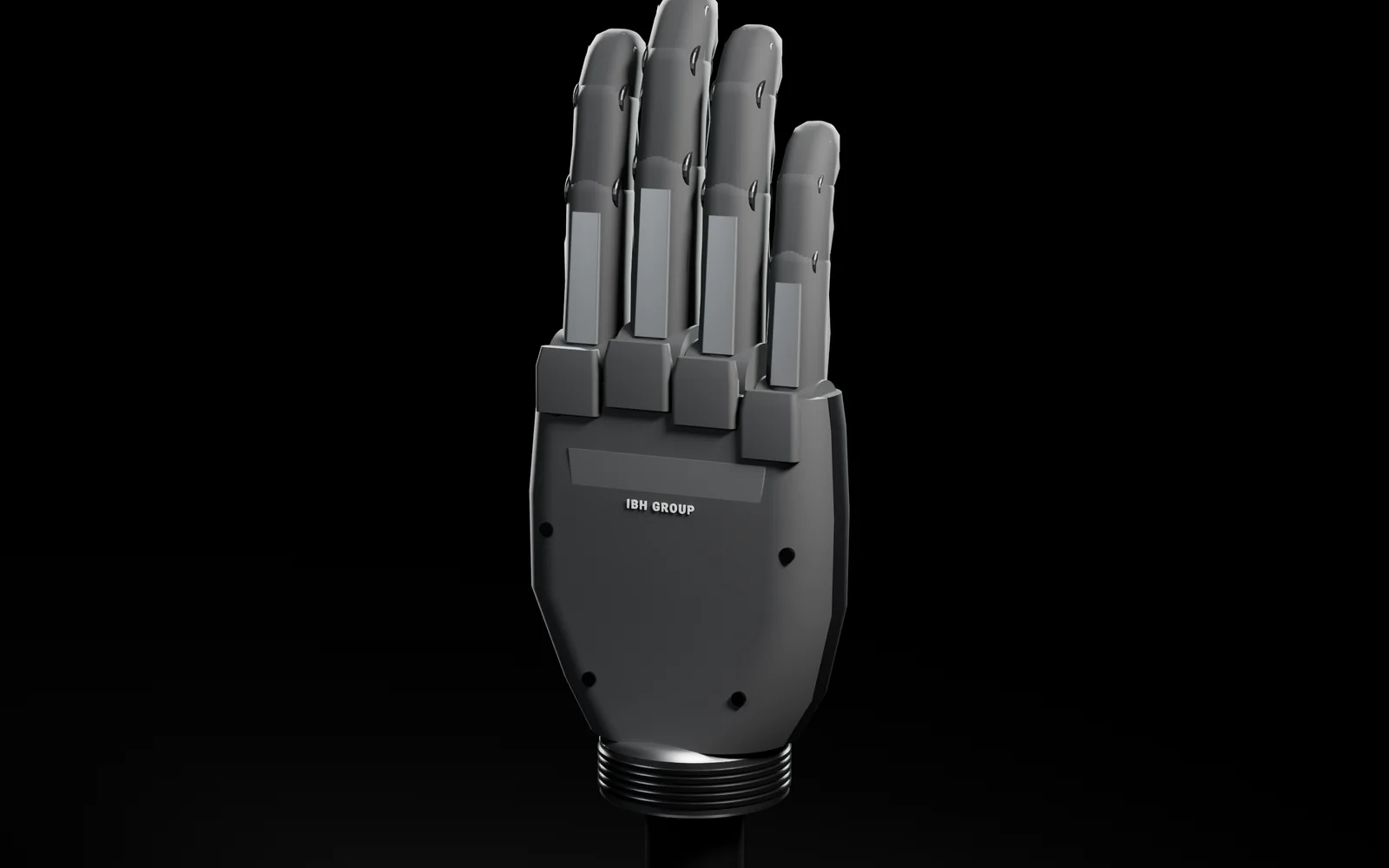
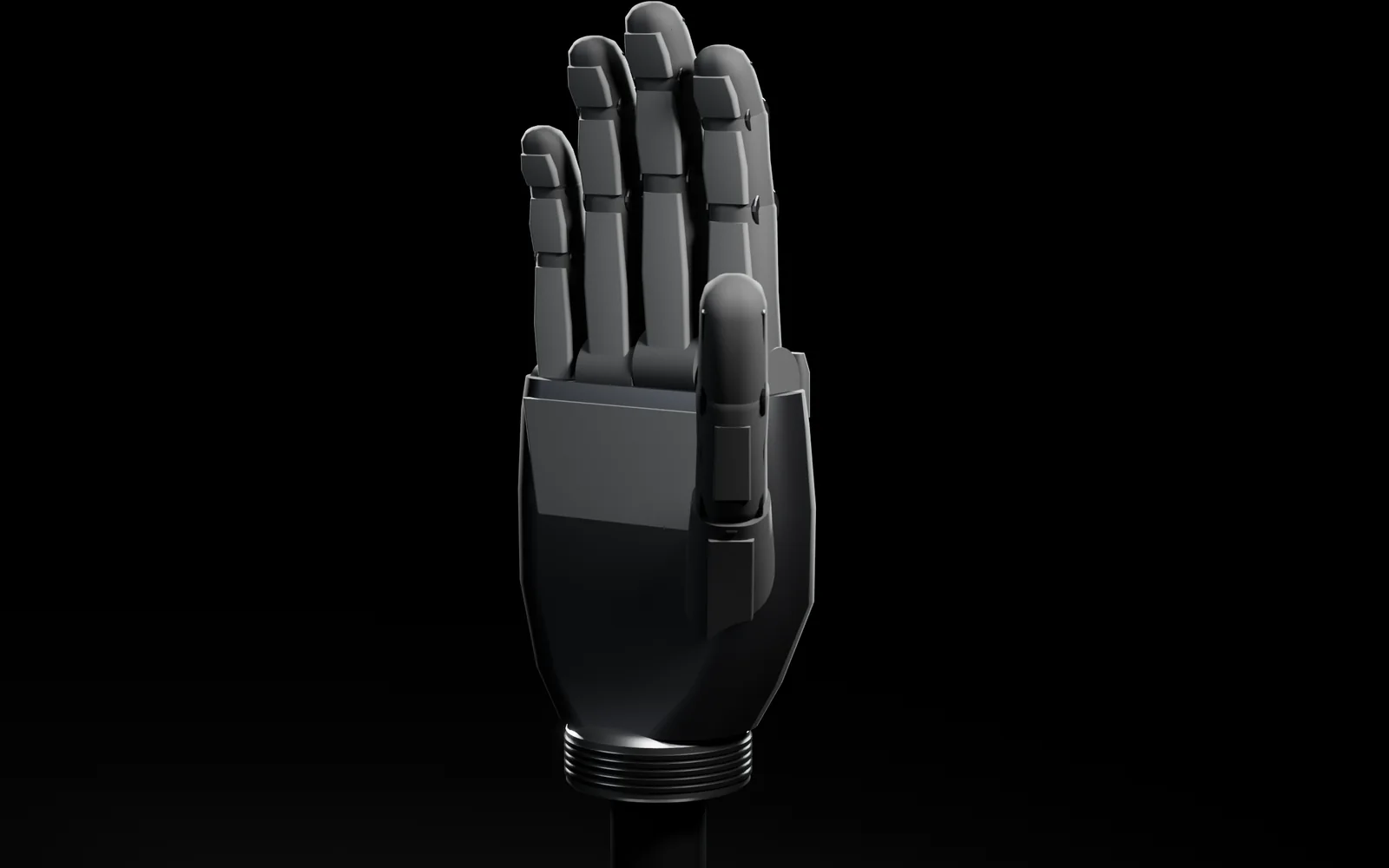
A robotic hand with five moving fingers, controlled by the forearm muscles.
- 6 motors
- 5 fingers
- The thumb flexes and rotates on two motors
- Hand weight
- 395 g
- 7075 aluminium and a PA12 nylon shell
- In the socket
- 8 electrodes
- Pick up the forearm’s muscle signals
- Run time per charge
- 2.5 days
- At 1,500 grips a day
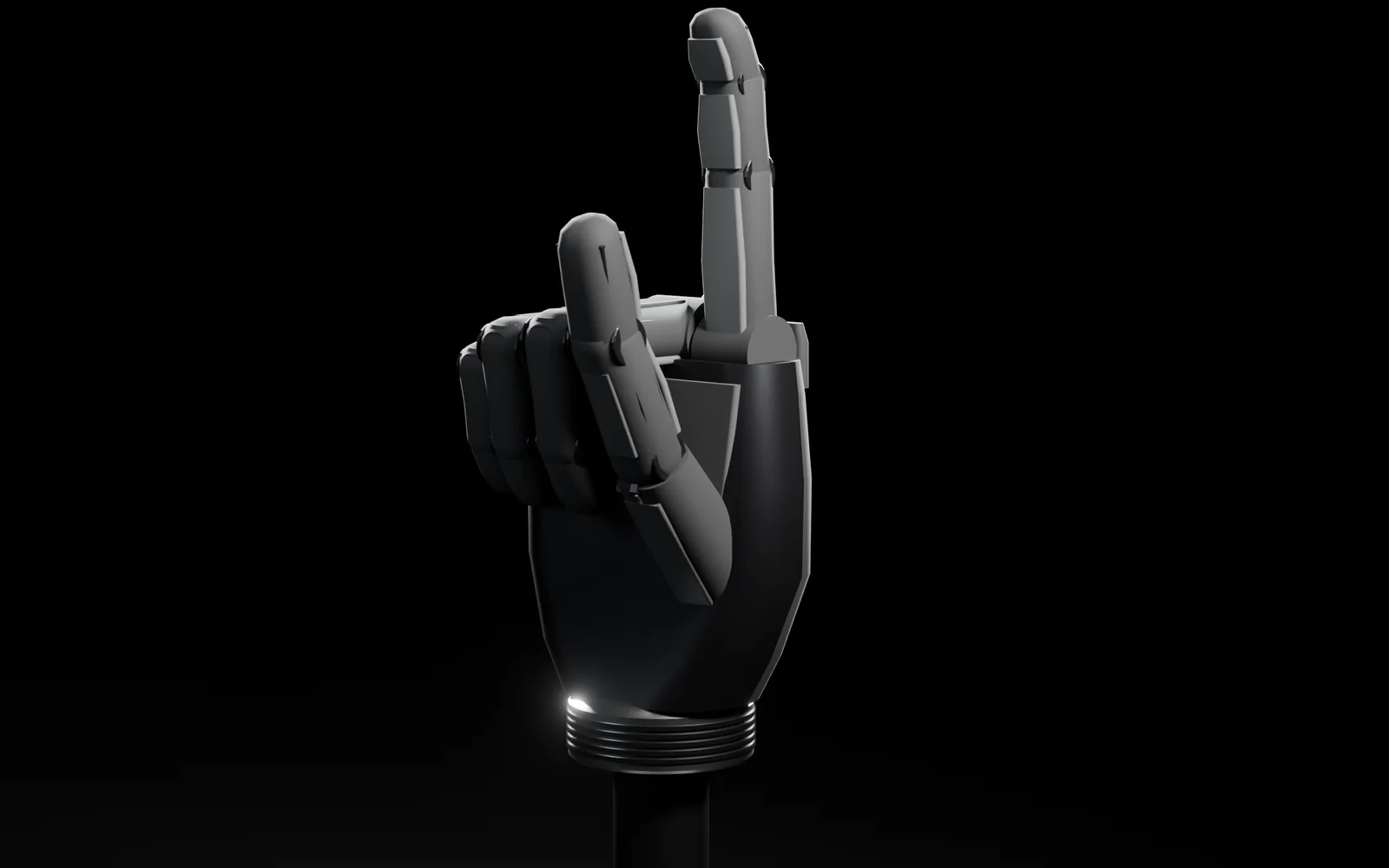
Eight electrodes inside the socket pick up the forearm’s muscle signals, and AI on the hand itself learns each muscle’s contraction pattern and selects the grip: fist, pinch, point or hook. For users who prefer simpler control, the hand can also open and close with just two electrodes.
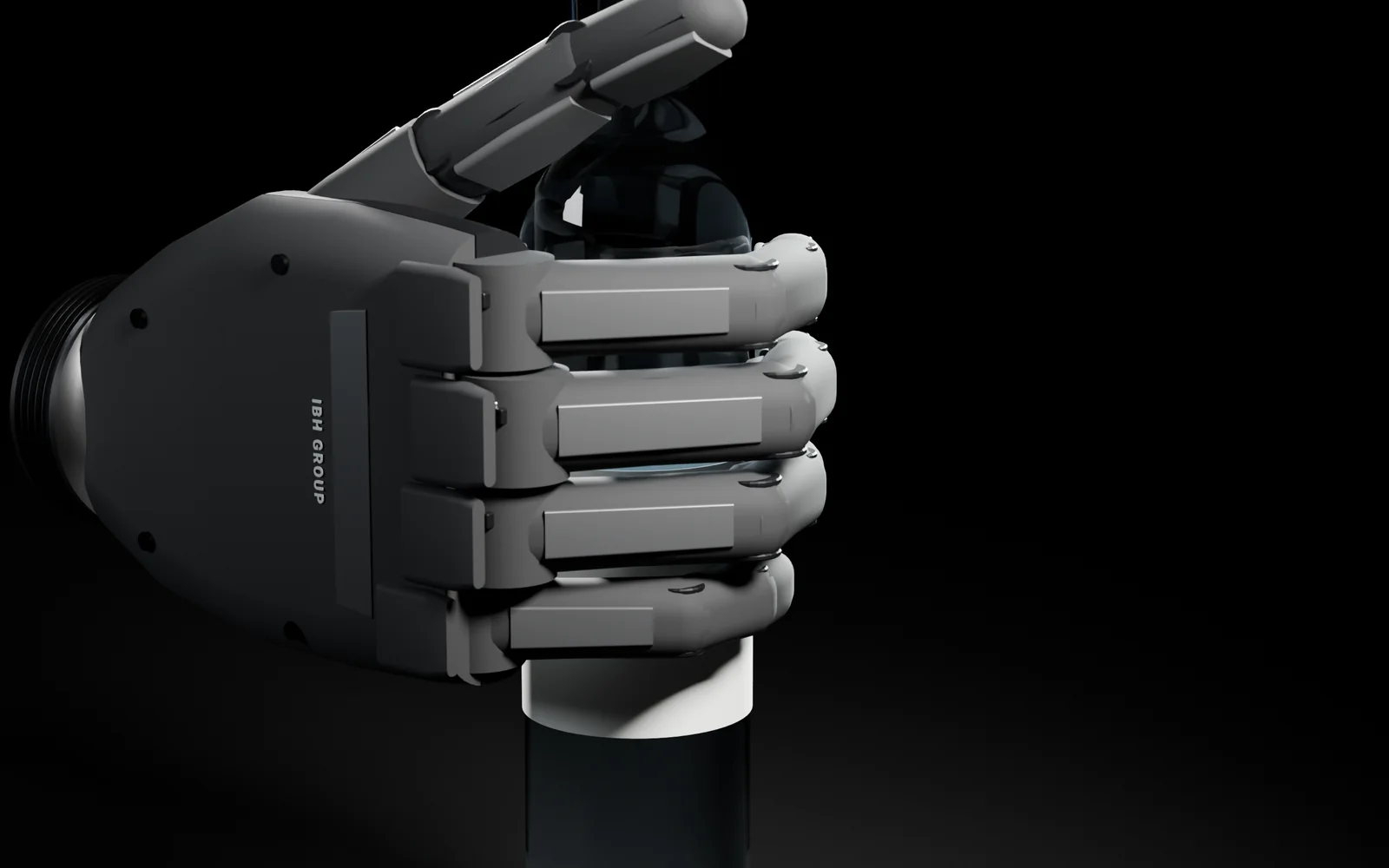
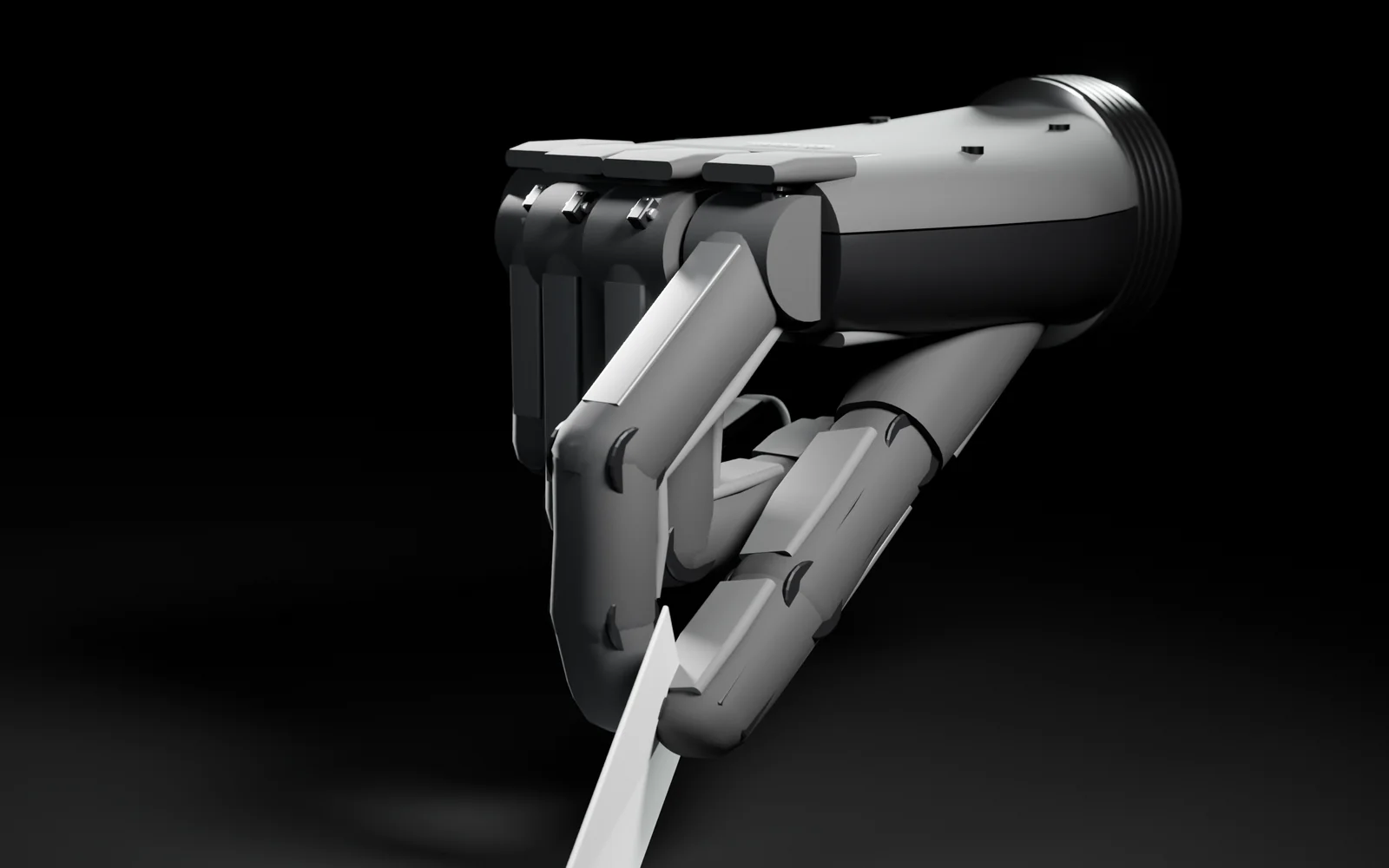
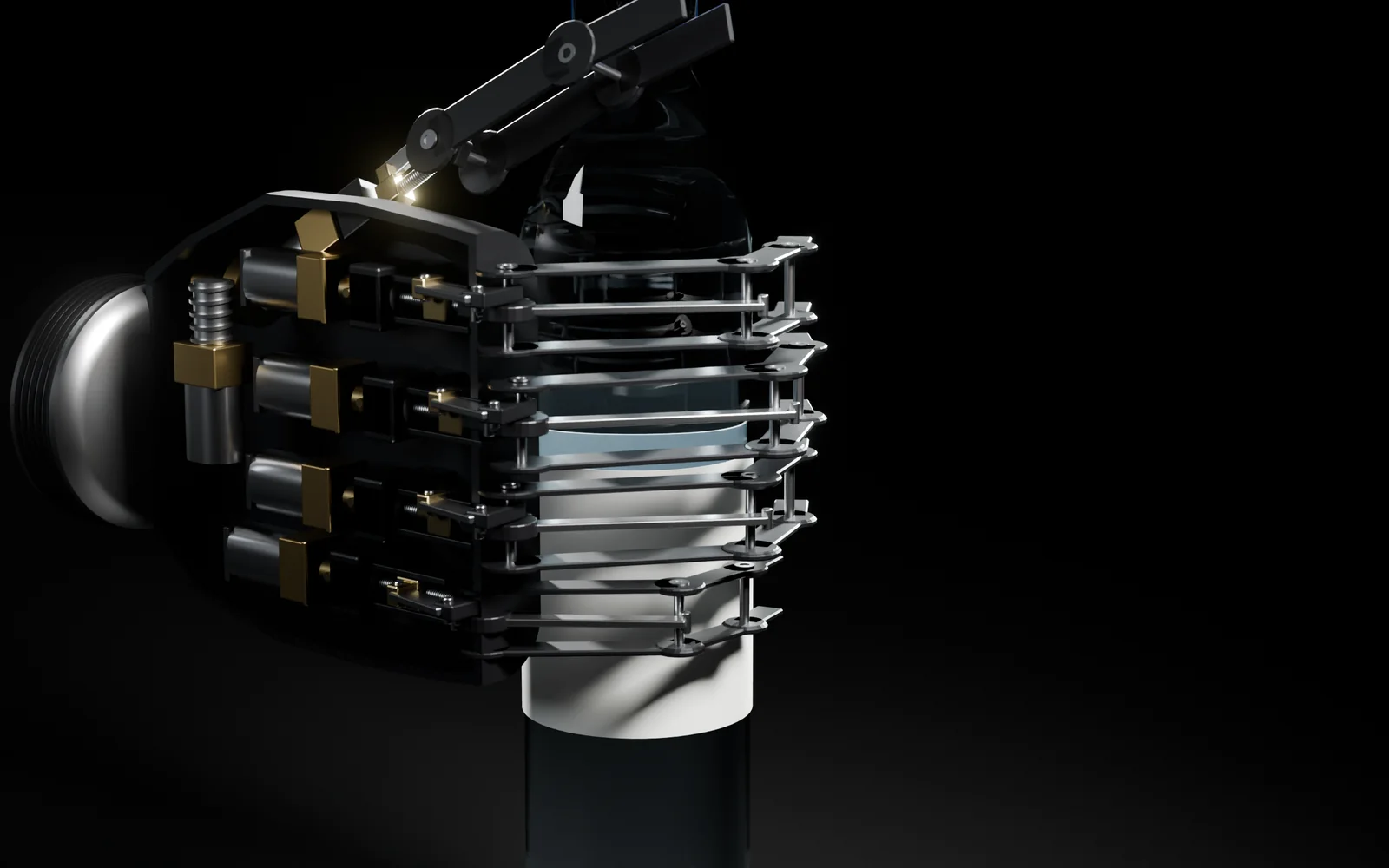
Each finger has its own motor, and the thumb both flexes and rotates between the opposed and side positions on two dedicated motors, so the hand can hold a bottle, pick up a card or key with the fingertips and carry a bag. The fingers move on self-locking screws, so a grip holds without drawing power.
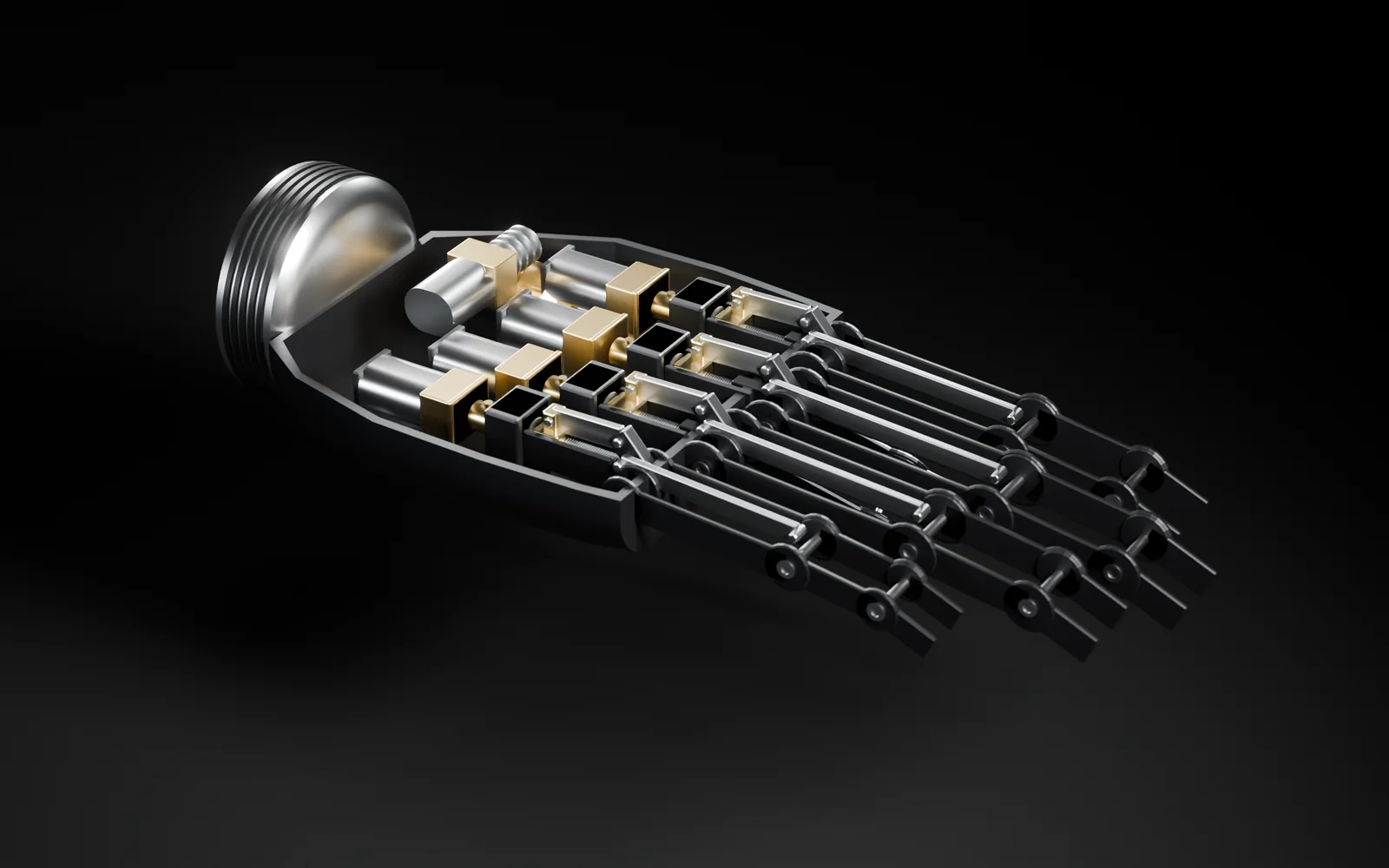
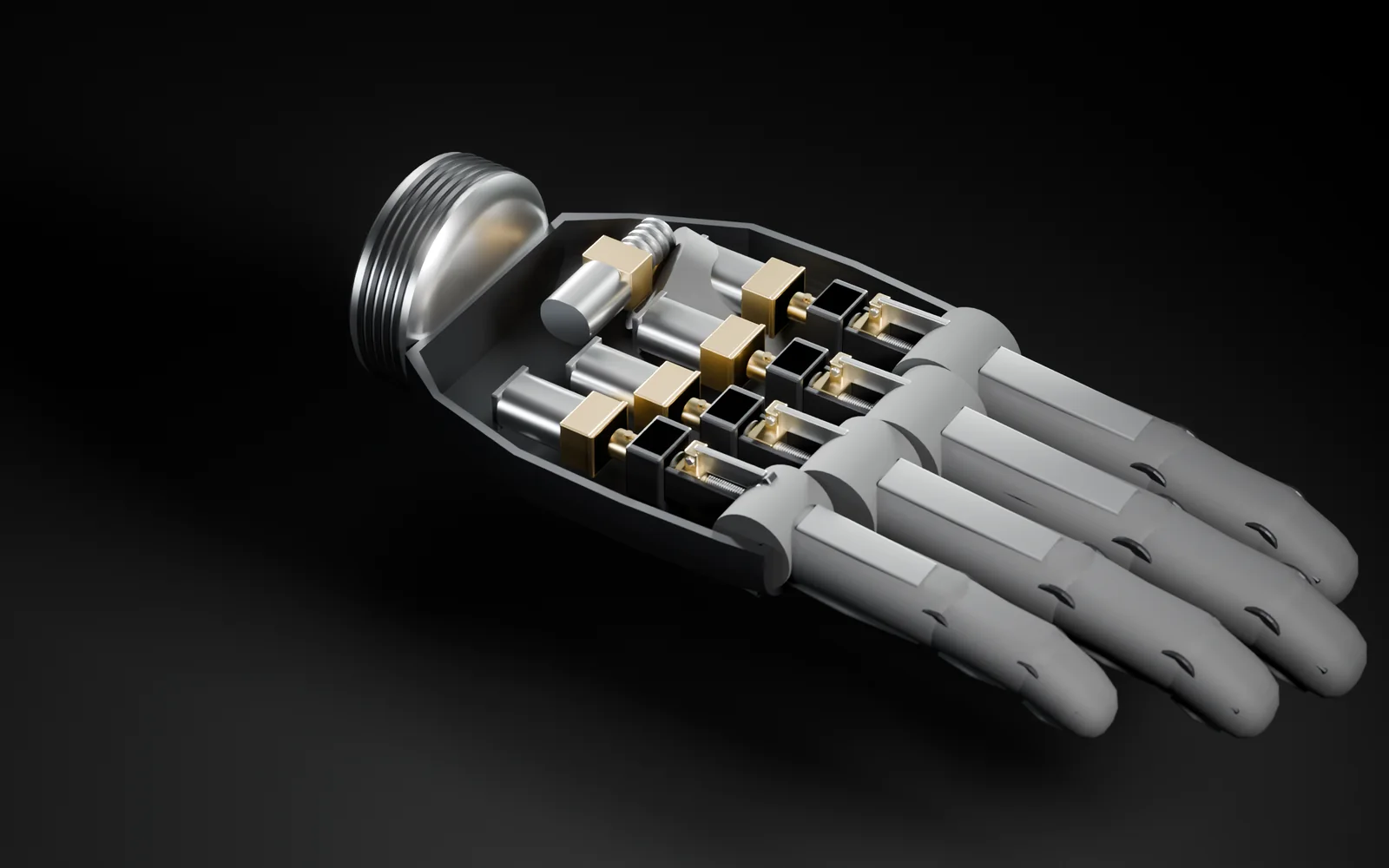
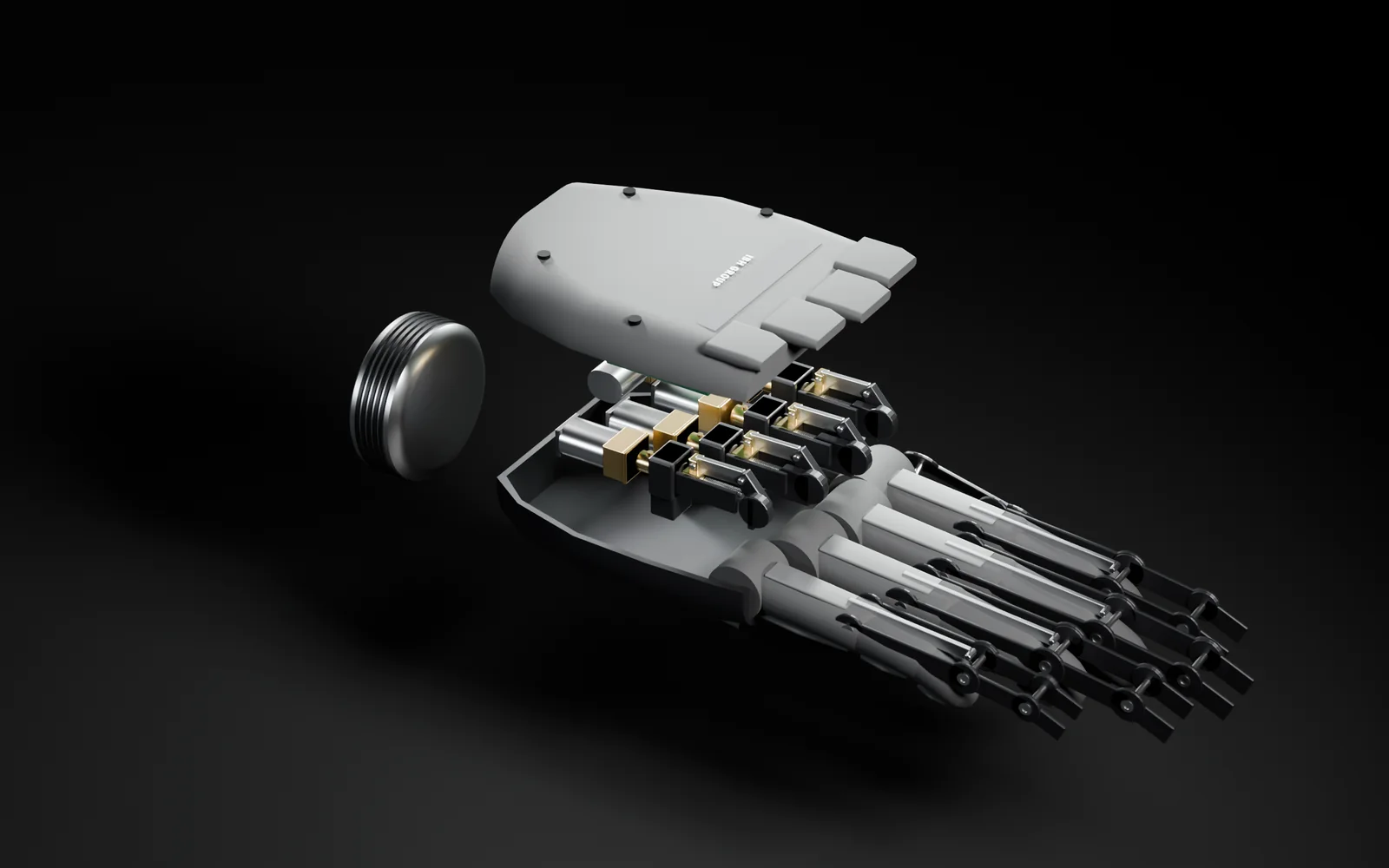
From body to components
Overview
Five moving fingers on six motors, sized for an adult hand: 212 mm long including the wrist connector, a palm 89 mm wide and 30 mm thick, and about 395 g in all.
Inside
The palm chassis and finger frames are hard-anodized 7075 aluminium under a matte PA12 nylon shell. The fingertips, finger pads and palm pad are soft silicone, so objects don’t slip.
Components
Six motors, a self-locking screw in each finger and silicone fingertips; a two-cell 7.2 V lithium-ion battery sits in the socket, and the hand clicks on and off the socket’s standard ring with a quick disconnect.
Key capabilities
Forearm muscle control
Eight dry electrodes around the forearm, inside the socket, pick up the muscle signals, and AI on the hand learns the contraction pattern for each grip. Where simpler control is needed, opening and closing with two electrodes is also possible.
Stable grip, no power draw
Each finger moves on a self-locking screw: once the hand has gripped, the motors switch off and the fingers stay put. Even if power is cut, the hand does not open and nothing is dropped.
Carries bags
With the fingers hooked, the hand holds a bag or case of up to 15 kg with the motors off: the load rests on the locked fingers, not on the motors.
Light and strong
The palm chassis and finger frames are 7075 aluminium, the shell PA12 nylon and the fingertips silicone, so nothing slips. The whole hand weighs about 395 g, lighter than most electric hands on the market.
Over two days per charge
The two-cell lithium-ion battery in the socket runs about two and a half days at 1,500 grips a day; because a grip holds without power, energy goes mainly into moving the fingers.
Standard connection
The hand clicks on and off the socket’s standard 50 mm ring with a quick disconnect (QD). The socket is made individually for each user by a prosthetist, and the hand mounts on it.
3D view
Specifications
Figures marked “proposed” will be confirmed by the engineering team before release. Each socket is custom-made for its user by a prosthetist.
Size & weight
- Overall length
- 212 mm
- Palm width
- 89 mm
- Palm thickness
- 30 mm
- Weight
- about 395 g
- Wrist connection
- QD, Ø50 ring
Motion & force
- Moving fingers
- 5, with 6 motors
- Closing time
- 0.86 s
- Power grip
- 52 N
- Tip-to-tip pinch
- 7 N
- Hook carry
- up to 15 kg
Control & energy
- Electrodes
- 8-channel dry EMG
- Control
- On-hand pattern recognition
- Battery
- 2 × 18650, 7.2 V, 3000 mAh
- Run time
- about 2.5 days
Build & materials
- Palm chassis
- 7075-T6 aluminium, black anodized
- Shell
- PA12 nylon, matte black
- Fingertips
- Medical silicone, Shore A 40
Main applications
- Daily tasks: eating, dressing, using a phone or a card
- Carrying bags
- Light office and workshop work
Gallery